
The Kukis have already declared that they are not fielding any candidate in the parliamentary polls as an act of boycott.

In violence-hit Manipur, the general buzz associated with elections and the related paraphernalia of posters, banners and rallies are missing but it is the presence of these brown boxes with pictures of guns that is symbolic of the strife-ridden society struggling to return to normalcy.

The Election Commission of India has set up more than 200 polling stations within housing societies in the urban areas of Uttar Pradesh to increase the voter turnout in the politically crucial state.

Living separately and refusing to co-exist in future, many members of both Kukis and Meitis communities ask - why elections at this time and what difference will they make?

'If the government can conduct elections during such a time, I am sure they can find ways to bring peace and address the concerns of people. Everything that we had built over the years got burnt and now we are supposed to start our lives from scratch and we should also vote?'

A majority of over 50,000 internally displaced people are currently staying at relief centres across five valley districts and three hill districts.

The only visible hint of the impending election is the hoardings put up by local election authorities, urging citizens to exercise their franchise.

Questioning the relevance of the electoral process amidst the ongoing turmoil, the women traders from various market associations, are contemplating a boycott of the polls with their major grievance being -- 'the nation forgot Manipur'.

With polls to elect the 18th Lok Sabha approaching, district poll panels are fixing the rates for expenses as part of the election expenditure monitoring process.

However, the national party count has gone down to six from 14 in over seven decades.

According to the Election Commission of India, the code has evolved over the last 60 years to assume its present form.
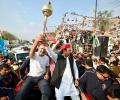
The outcome of the polls to the Rajya Sabha is likely to have an impact in the politically crucial state just ahead of the general elections in the country.

Hailing India and the UAE as "partners in progress", Prime Minister Narendra Modi on Tuesday said the ties between the two countries serve as a model for the world and they are scripting a new history in the third decade of the 21st century.

'The temple's construction is the result of collective wisdom of some of the best brains in the country. Water and sacred soil from almost all pilgrimage sites in India, including Gangotri, Yamunotri, Kailash Mansarovar, Prayags (there are seven Prayags) and all 'puris' (seven holy towns in India, besides Ayodhya) have been used in the making of the temple'
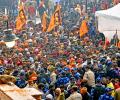
Around five lakh devotees visited the Ram temple complex on day one as it opened its doors to the public on Tuesday, a day after the consecration ceremony, according to officials.
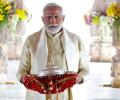
Prime Minister Narendra Modi presented gifts from Sri Ranganath Swamy temple in Tiruchirapalli to the newly constructed Ram temple in Ayodhya.
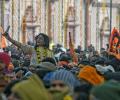
'Divine experience and a proud moment' is how the 15 couples who were the 'mukhya yajman' for the consecration ceremony at the Ram temple in Ayodhya described the grand event and said that the day will be forever etched in their memories.
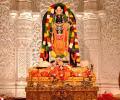
The first time I saw the idol, I was thrilled and tears started rolling down my face. I cannot explain the feeling I experienced then
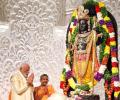
The new Ram Lalla idol was consecrated at the Ayodhya temple on Monday, an event led by Prime Minister Narendra Modi and watched by lakhs of people on television at their homes and in temples across the country.

As a festive spirit prevailed in Ayodhya, there was an emotional outpouring among residents of the holy city as the consecration of the new idol of Ram Lalla was held on Monday and said they indeed feel they are living in a divya (divine) Ayodhya, navya (new) Ayodhya and bhavya (grand) Ayodhya.
